


Handoff Construction Estimator
Handoff
Estimating a remodeling job is one of those tasks that can quietly consume an entire afternoon. I have found that the difficult part is rarely typing a final number; it is turning a conversation, a few measurements, material choices, labor assumptions, and changing customer expectations into an estimate that feels clear and defensible. Handoff Construction Estimator is built for that exact pressure point. It is a business app from Handoff that uses AI to help contractors estimate construction and remodeling work, and its appeal becomes obvious as soon as I imagine using it between a site visit and the next customer call.
My first impression is that this is not trying to replace a contractor’s judgment. It is more useful as a fast working layer between raw project information and a presentable estimate. That distinction matters. If you already know how a bathroom renovation, kitchen update, or repair job should be priced, the app can help you organize the thinking. If you expect artificial intelligence to understand every property, local labor condition, hidden defect, and client preference without supervision, you will probably be disappointed.
It is free to install, rated for Everyone, and supports devices running Android 8.0 or later. The app has reached over ten thousand installs and holds a 4.7 average from around six hundred ratings, which suggests that its practical focus is resonating with a meaningful group of users. The current release is 2.19.10, and Handoff lists in-app purchases at $149.99 per item, so I would treat the free entry point as a chance to test the workflow rather than assuming every useful capability will remain cost-free.
What the first week feels like
During the first week, the strongest benefit is speed of orientation. A traditional estimate often starts in scattered places: notes in a phone, measurements on paper, remembered supplier prices, and a mental list of tasks that still needs to be converted into a customer-friendly explanation. An AI estimator can make that first pass less intimidating. Instead of staring at a blank document, I can begin with the project itself and refine the result as I remember details.
That is especially valuable for small contractors who handle sales, site visits, estimating, and administration themselves. A dedicated estimating system may offer deeper controls, but it can also demand setup time before it becomes useful. Handoff feels aimed at the moment when a contractor needs to move quickly from “the client wants this changed” to “here is a sensible starting estimate.” The app’s business category is appropriate because its value is tied to a working process, not casual experimentation.
Related News

Why WhatsApp Messenger Still Makes Everyday Communication Feel Easy

Jurassic World: The Game Is the Better Dino Tycoon for Strategic Players

Threads in Real Life: Who Should Join, Lurk, or Leave

How SHEIN Turned Shopping Into an Endless Content Feed

How to Make Fortnite Feel Smarter on Mobile

Should You Switch to Microsoft Outlook on Mobile?
A realistic example would be a contractor who visits a homeowner interested in replacing cabinets, updating counters, repainting, and improving lighting. On the drive back, the contractor may remember the broad scope but still need to separate demolition, installation, finish work, materials, and possible allowances. I would use Handoff at that stage to create a structured first version, then compare each part against what I saw on site. The important habit is to use the generated estimate as a checklist, not as an unquestioned answer.
The most useful first-week habit is to treat every estimate as a conversation with yourself. I would ask: what work is definitely included, what depends on a choice the customer has not made, and what could change after demolition? This makes the app more valuable than a simple number generator. It encourages clearer thinking about scope, which is often where disputes begin.
Where the AI helps and where judgment still matters
The AI approach is helpful when the project description is incomplete but still understandable. Remodeling requests are often expressed in ordinary language rather than estimating terminology. A client might say that a room feels dated, that storage is poor, or that a wall should be opened up. Turning those comments into work categories requires interpretation. Handoff can help create a starting structure, but I would still verify whether the proposed work matches the actual site conditions.
Gallery
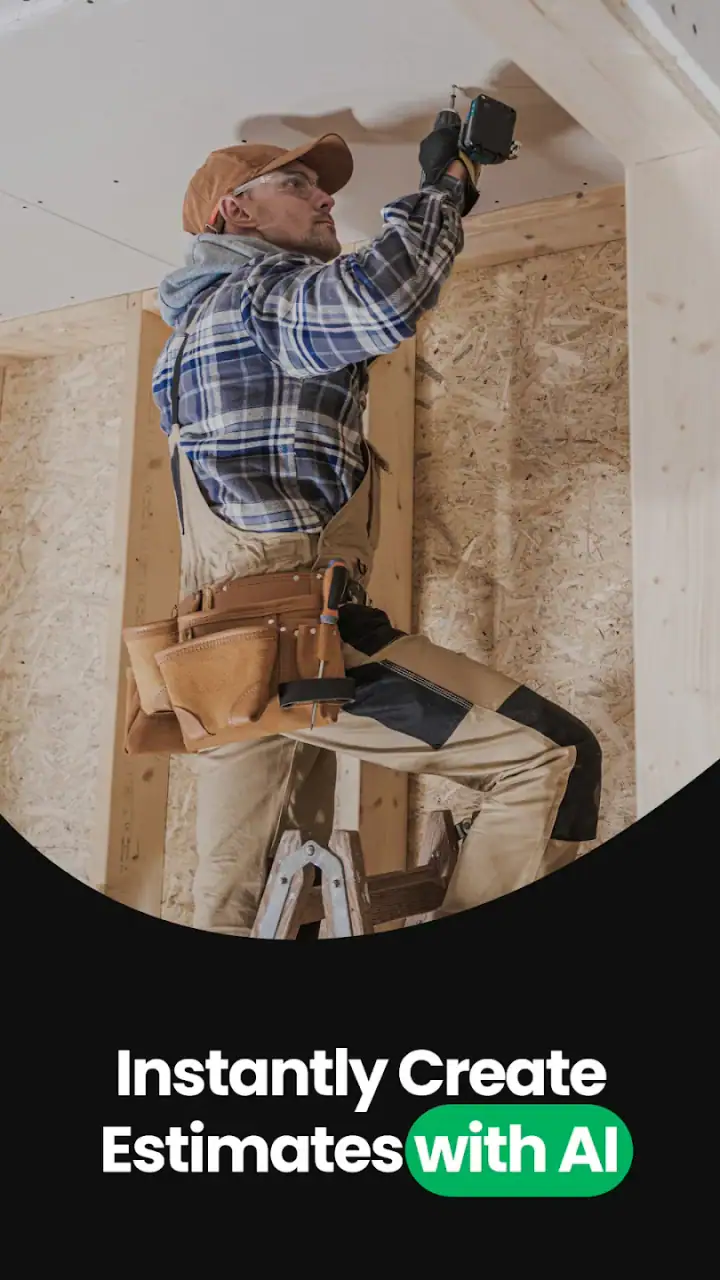
That verification is not a minor formality. An estimate can look polished while overlooking disposal, access problems, protection of occupied spaces, permit-related work, specialty trades, or repairs discovered after surfaces are removed. The app may help me remember the broad categories, but it cannot walk through the property in my place. I would never send an AI-assisted estimate without checking quantities, assumptions, exclusions, and the difference between an allowance and a committed price.
Compared with a spreadsheet, the main advantage is less friction at the beginning. A spreadsheet gives me control, but I must design the structure, maintain formulas, and decide how to present the result. Compared with a full construction management platform, Handoff appears more focused on estimating rather than becoming the central system for scheduling, accounting, procurement, and job tracking. That focus is attractive for a contractor who needs a practical estimating companion, but it may feel limited to a company looking for an all-in-one operational hub.
Three ways I would use it beyond a basic estimate
My first less-obvious use would be preparing two scope versions for the same customer. For example, I could separate essential repair work from optional improvements instead of presenting one intimidating total. That makes the customer conversation more productive and protects the contractor from casually promising every idea discussed during a walkthrough. The app becomes a tool for framing decisions, not merely calculating a bottom line.
My second use would be reviewing estimates before sending them. I would read the output as if I were the homeowner and mark anything that could be misunderstood: vague descriptions, missing finish assumptions, unclear quantities, or work that sounds included but is actually conditional. AI-generated wording can be smooth while remaining too broad. A deliberate review pass turns that smoothness into something safer and more professional.
My third use would be building a repeatable estimating routine for similar jobs. If I regularly handle comparable bathroom refreshes or exterior repairs, I can use each new estimate to check whether I am consistently forgetting the same category. The recurring value is not that the app magically knows my business; it is that it can support a repeatable mental process. Over time, that may be more useful than the novelty of generating a first estimate quickly.
Whether it earns a place month after month
The first-week appeal is easy to understand, but long-term usefulness depends on whether the app remains part of the contractor’s normal rhythm. I think Handoff has a chance to earn that space when estimating is frequent, projects vary, and the user wants help turning rough descriptions into organized proposals. It is less compelling for someone who completes only an occasional job or already has a carefully maintained estimating system that fits perfectly.
Month-to-month value comes from reducing repeated effort. Every new project asks similar questions: what is the scope, what is excluded, which materials are assumed, what labor is required, and which unknowns need to be discussed before work begins? A focused estimator can make those questions easier to revisit. The benefit is small on any single estimate, but repeated across many customer conversations it can become a meaningful time saver.
I would also judge its value by the quality of the conversations it creates. A good estimate should help a customer understand why a project costs what it costs. Breaking work into recognizable stages gives the contractor something concrete to discuss when the client wants to remove a task, upgrade a finish, or postpone part of the project. That is more durable than simply producing a fast total because it supports negotiation without forcing the contractor to rebuild the document from scratch.
Still, recurring value depends on personal discipline. If I enter vague descriptions, accept every suggestion, and never compare the estimate with actual project outcomes, the app will not improve my business. I would keep a simple habit of reviewing completed jobs: which parts were consistently underestimated, which allowances caused confusion, and which customer questions appeared repeatedly? Handoff can support that reflection, but the learning comes from the contractor’s own records and experience.
Who will get the most from it
I would recommend trying it first if you are an independent contractor, remodeler, or small construction team that needs a quicker way to prepare estimates without adopting a large business platform. It may also suit someone who is comfortable using mobile tools but does not want to build a complicated spreadsheet template. The free starting point lowers the risk of testing it during a real estimating cycle, although the listed in-app purchase price means I would check the available workflow carefully before relying on it for every job.
The app is particularly interesting for contractors who are good at field work but less comfortable with administrative presentation. A clear estimate can influence whether a customer trusts the process, even when the underlying craftsmanship is excellent. Handoff may help bridge that gap by making the first draft easier to produce and easier to discuss.
I would be more cautious if you operate a larger company with strict estimating controls, multiple approval stages, detailed cost codes, or deep integration requirements. In that environment, a specialized construction management or accounting system may be a better foundation. Handoff could still be useful for early scoping, but I would not assume it should replace the system that handles final financial control.
The maintenance burden behind the convenience
Every estimating app creates some maintenance work, even when artificial intelligence reduces the initial effort. I would need to keep my own pricing knowledge current, check whether assumptions still reflect my suppliers and subcontractors, and review the language used for recurring project types. The app can help organize an estimate, but it does not remove the responsibility to maintain a reliable estimating method.
There is also a practical maintenance burden in learning how to prompt or describe work clearly. I would expect better results from a description that identifies the room, existing condition, intended finish, access concerns, and known exclusions than from a short phrase such as “renovate kitchen.” The more specific the input, the easier it is to spot whether the output actually reflects the job. This is an important trade-off: the app saves time, but careless input can create false confidence.
Version changes are another reason to review the workflow occasionally. The current version is 2.19.10, and I would make a habit of checking the app after updates before using it for a high-stakes proposal. That does not mean updates are a problem; it simply reflects the reality that business tools become part of a process. A contractor should know where estimates are created, how they are reviewed, and how a final copy is retained for later reference.
What could cause fatigue over time
The first source of fatigue is repetition without enough customization. If every estimate begins to sound alike, customers may receive wording that is technically tidy but not tailored to their property. I would avoid copying an AI-generated description unchanged across different jobs. A short personal edit can make the scope clearer and expose assumptions that generic language hides.
The second is the temptation to trust speed more than accuracy. A quick estimate feels productive, especially during a busy week, but remodeling contains too many variables for speed to be the only measure. I would be particularly careful with older properties, partially completed work, unusual access, structural questions, and projects where the customer has not selected materials. These situations reward inspection and conversation more than automation.
The third is cost uncertainty. The listed in-app purchase price of $149.99 per item makes the commercial side important for a small contractor. I would test the free experience with several different project types before deciding whether a paid item fits my workflow. The right question is not simply whether the price seems high or low; it is whether the time saved and the improvement in estimate quality justify that expense for the number of jobs I actually quote.
There is also a psychological fatigue that comes from reviewing generated work. If the app produces drafts that require heavy correction every time, the process may become slower than using a familiar template. That is why I would judge it over multiple estimates rather than one impressive first session. A lasting tool should reduce total effort, including checking and editing, not just make the opening step look effortless.
How it compares with familiar alternatives
A spreadsheet remains the better choice when I need complete transparency and custom formulas. I can see every calculation, change a rate, and create a structure that exactly matches my business. Its weakness is that it depends heavily on my own setup and discipline. Handoff is more appealing when the challenge is turning an unstructured project description into a usable draft rather than calculating a highly customized financial model.
A paper notebook or phone notes app is still useful during a site visit because it is fast and flexible. I would not abandon those tools just because an estimator exists. In fact, I would likely capture observations first and use Handoff afterward, when I can think through the scope with fewer distractions. The app fits best as a second step in that workflow rather than as a replacement for field notes.
A larger construction platform may win when estimating must connect directly to scheduling, job costing, invoices, team permissions, or customer communication. Handoff’s focused identity is its strength for a smaller operation and its possible limitation for a growing one. I would choose it when estimating is the immediate bottleneck, not when the main problem is coordinating an entire company.
My long-term verdict
After the novelty of AI-assisted estimating fades, I think Handoff Construction Estimator can still earn a place for contractors who quote work regularly and want a faster, more organized starting point. Its lasting value is not the surprise of seeing a draft appear. It is the possibility of making scope review, customer discussion, and estimate preparation more consistent from one project to the next.
I would recommend using it with a firm review routine: describe the job in concrete terms, separate confirmed work from options, inspect every assumption, and adjust the result to match real site conditions. I would also compare its output with completed projects over time. That is how I would discover whether it genuinely improves my estimating or merely makes the first draft feel easier.
For a solo contractor or small remodeling business, the combination of a free starting point, an Everyone age rating, and a focused business purpose makes it worth testing. The strong 4.7 average from around six hundred ratings is encouraging, but my decision would still depend on repeated use across different project types and on whether the paid offering fits the business. Popularity cannot replace a workflow test.
I would skip it as a primary system if I needed detailed enterprise controls, comprehensive project management, or a tightly integrated accounting process. I would also skip it if I disliked reviewing AI-assisted work or already had a dependable estimating template that required less correction. For everyone else, the app is best understood as a practical estimating partner: useful for turning rough remodeling ideas into a structured conversation, but never a substitute for trade knowledge, site inspection, or final responsibility.
My final view is positive but measured. Handoff deserves a place on the shortlist for contractors who want to reduce the blank-page problem and build a steadier estimating habit. It earns lasting space only when the user keeps the human checks in place. Used that way, it can remain useful after the initial excitement has gone—not because it eliminates the hard parts of estimating, but because it helps make those hard parts easier to see and manage.
FAQs for Handoff Construction Estimator
What is Handoff Construction Estimator used for?
Handoff Construction Estimator is designed to help construction professionals prepare project estimates, organize labor and material costs, and turn field information into clearer pricing documents. It can be useful for contractors, remodelers, and small construction teams that want to reduce manual calculations and keep estimating work more consistent. Before downloading, users should confirm that its features match their trade, workflow, and preferred estimating process.
Can Handoff Construction Estimator estimate materials and labor?
The app is intended to support common estimating tasks involving project quantities, materials, labor, and related costs. Its usefulness depends on how much detail your project requires and whether your pricing data is already prepared. Users should review the available categories, measurement options, templates, and calculation tools after installation, particularly if they estimate specialized work or need advanced assemblies, subcontractor pricing, or highly customized cost databases.
Is Handoff Construction Estimator suitable for professional contractors?
Handoff Construction Estimator may be helpful for independent contractors, remodelers, and construction businesses that need a more organized way to create estimates. However, it should be evaluated against your company’s requirements before being used as the only estimating system. Larger teams may need features such as shared access, approval workflows, detailed reporting, integrations, customer management, or accounting connections that may not be available in the app.
Does Handoff Construction Estimator work offline?
Offline availability is an important point to check before relying on Handoff Construction Estimator at a job site. Some estimating functions may require an internet connection for account access, synchronization, updates, or cloud storage, while other parts may remain accessible locally. Test the app in airplane mode after installation and verify how drafts, saved estimates, attachments, and changes are handled when the connection is restored.
Is Handoff Construction Estimator free to download?
The download price and available features can vary depending on the platform, subscription plan, or in-app purchase options. Before starting a project, review the current listing for trial limitations, recurring charges, included tools, and any restrictions on estimates, storage, exports, or collaboration. Contractors should also check the cancellation and refund terms so there are no unexpected costs after the introductory period ends.
Pros
- Speeds up material and labor calculations for common construction jobs.
- Helps keep estimates organized in one place for easier reference.
- Useful for contractors handling multiple projects or customer quotes.
- Can reduce arithmetic mistakes compared with manual calculations.
- Supports faster on-site pricing decisions when immediate estimates are needed.
Cons
- May require setup time to match estimates with your pricing structure.
- Results depend on accurate measurements and current material costs.
- Advanced estimating needs may exceed the app’s built-in tools.
- Small screens can make detailed estimate editing less convenient.
- Some features may require an account
- subscription
- or internet connection.


